• SharkLoader, used by an intrusion cluster tracked as StrikeShark to deliver Cobalt Strike Beacon entirely in memory across a wide international footprint. The campaign combines opportunistic exploitation of exposed internet-facing infrastructure with custom droppers disguised as trusted installers to establish initial access, then relies on layered, memory-only execution techniques and “Perfect DLL Hijacking” to minimize […]

    The post SharkLoader Malware Uses Perfect DLL Hijacking to Execute Cobalt Strike in Memory appeared first on GBHackers Security | #1 Globally Trusted Cyber Security News Platform.

    ¶¶¶¶¶

    ¶¶¶¶¶

    ¶¶¶¶¶

    ¶¶¶¶¶

    ¶¶¶¶¶

  • A newly disclosed sandbox escape technique in Anthropic’s Claude Cowork for Windows illustrates how attackers can achieve root-level command execution inside a Hyper-V–isolated Ubuntu virtual machine (VM) by exploiting design vulnerabilities in CoworkVMService and its Remote Procedure Call (RPC) interface. This issue, documented by researcher Nick McClendon from Armadin, highlights weaknesses in the interaction between […]

    The post Claude Cowork Sandbox Flaw Lets Attackers Execute Commands as Root in Hyper-V VM appeared first on GBHackers Security | #1 Globally Trusted Cyber Security News Platform.

    ¶¶¶¶¶

    ¶¶¶¶¶

    ¶¶¶¶¶

    ¶¶¶¶¶

    ¶¶¶¶¶

  • Citrix NetScaler appliances are currently facing significant threats due to the rapid exploitation of a newly disclosed memory disclosure vulnerability, CVE-2026-8451, which is part of the evolving “CitrixBleed” class. This high-severity flaw (CVSS 8.8), disclosed on June 30, 2026, in Citrix advisory CTX696604, was observed being exploited in the wild within just 24 hours of […]

    The post CitrixBleed Vulnerability Exploitation Within 24 Hours of Disclosure appeared first on GBHackers Security | #1 Globally Trusted Cyber Security News Platform.

    ¶¶¶¶¶

    ¶¶¶¶¶

    ¶¶¶¶¶

    ¶¶¶¶¶

    ¶¶¶¶¶

  • A widescale escalation in the PolinRider supply‑chain campaign: threat actors have compromised GitHub maintainer accounts to publish infected package versions across multiple ecosystems. The investigation identified 162 malicious release artifacts across 108 unique packages and extensions in npm, Packagist, Go modules, and a Chrome extension, linking this activity to the broader North Korean Contagious Interview […]

    The post Hackers Compromise GitHub Maintainer Accounts to Publish PolinRider-Infected Package Versions appeared first on GBHackers Security | #1 Globally Trusted Cyber Security News Platform.

    ¶¶¶¶¶

    ¶¶¶¶¶

    ¶¶¶¶¶

    ¶¶¶¶¶

    ¶¶¶¶¶

  • Google has disrupted the NetNut residential proxy botnet, a large-scale infrastructure widely exploited for malware command-and-control (C2) operations and password spray attacks. This coordinated effort involved the FBI, Lumen, and various industry partners. It was announced by Google’s Threat Intelligence Group (GTIG) on July 3, 2026. This action is part of an ongoing campaign to […]

    The post Google Disrupts NetNut Residential Proxy Botnet Used for Malware C2 and Password Spray Attacks appeared first on GBHackers Security | #1 Globally Trusted Cyber Security News Platform.

    ¶¶¶¶¶

    ¶¶¶¶¶

    ¶¶¶¶¶

    ¶¶¶¶¶

    ¶¶¶¶¶

  • Explore how VMware licensing changes are influencing infrastructure modernization, cloud strategy, and AI readiness, and what enterprises should evaluate next.

    ¶¶¶¶¶

    ¶¶¶¶¶

    ¶¶¶¶¶

    ¶¶¶¶¶

    ¶¶¶¶¶

  • The Federal Bureau of Investigation (FBI) said today it worked with industry partners to seize hundreds of domains associated with NetNut, a sprawling residential proxy service operated by the publicly-traded Israeli company Alarum Technologies [NASDAQ: ALAR]. The action comes roughly two weeks after KrebsOnSecurity published findings from multiple security firms connecting NetNut to the Popa botnet, a collection of at least two million devices that have been compromised by malicious software with little or no consent from victims.
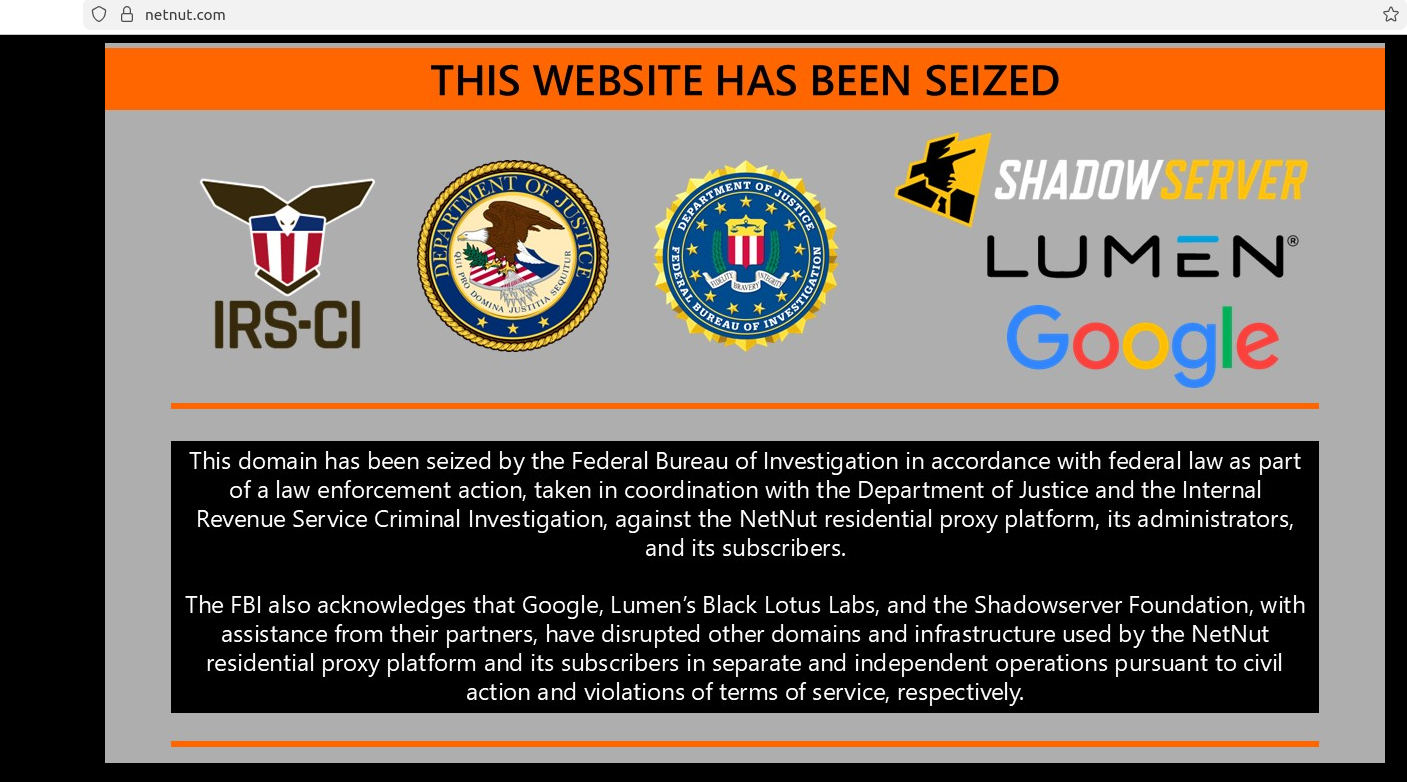
    The NetNut homepage today was replaced by this seizure banner from the FBI.

    On June 19, three different security firms issued similar findings: That NetNut is a residential proxy network which populates a botnet called Popa, and distributes software for devices commonly found in homes, such as smart TVs and streaming boxes. NetNut’s software turns those systems into always-on residential proxy nodes that are rented to others, who predominantly use them to relay abusive and intrusive Internet traffic, such as mass content scraping, advertising fraud, and account takeover activity.

    Earlier today, NetNut’s homepage was replaced with a seizure notice from the FBI and the Internal Revenue Service Criminal Investigation division. The seizure notice thanked Google, Lumen, Shadowserver and other industry partners for their help in dismantling hundreds of domains tied to the Popa botnet, which experts say has long been synonymous with NetNut’s residential proxy infrastructure.

    In a blog post published today, the Google Threat Intelligence Group (GTIG) said NetNut’s proxy network is widely resold and white-labeled by a number of third-party proxy providers, and that its services are heavily sought out by cybercriminals seeking to obfuscate the source of their malicious traffic. The GTIG said that in a single week during June 2026, they observed 316 distinct clusters of threat actors using suspected NetNut exit nodes, including cybercriminal and espionage groups.

    “These bad actors can use NetNut to mask their origin IP address when accessing victim environments, accessing their own infrastructure, and conducting password spray attacks,” Google’s GTIG wrote. “Furthermore, when a consumer device becomes an exit node, unauthorized network traffic passes through it. This means bad actors can access other private devices on the same home network, effectively exposing them to Internet threats.”

    Google said it disabled Google accounts and services used by NetNut for malware command and control, and that it shared technical intelligence on NetNut’s software development kits (SDKs) and backend infrastructure with platform providers, law enforcement and research firms. The company also disabled apps known to bundle NetNut’s various SDKs.

    Omer Weiss, legal counsel for NetNut parent Alarum Technologies, said the company was aware of the FBI seizure and cooperating with investigators.

    “Alarum takes this matter seriously and will fully cooperate with law enforcement to ensure any misuse of its infrastructure is thoroughly investigated and those responsible are held to account,” Weiss said in a written statement.

    Benjamin Brundage is founder of the proxy tracking service Synthient, one of the companies that published evidence last month linking the Popa botnet to NetNut and Alarum Technologies. Brundage said the domain seizures appear to have disrupted both the Popa botnet and the NetNut proxy network that rides on top of it.

    Brundage said NetNut’s apparent demise is likely to be a great disadvantage for the cybercrime community, which was already reeling from legal actions by Google earlier this year that seized infrastructure for NetNut’s biggest competitor — IPIDEA.

    “I think this takedown is going to have a big impact, because NetNut gained significant popularity after the IPIDEA takedown,” he said. “Also NetNut has been incredibly common among resellers, and they were on par with IPIDEA in terms of their daily traffic, quality, size, price per gigabyte, all of it.”
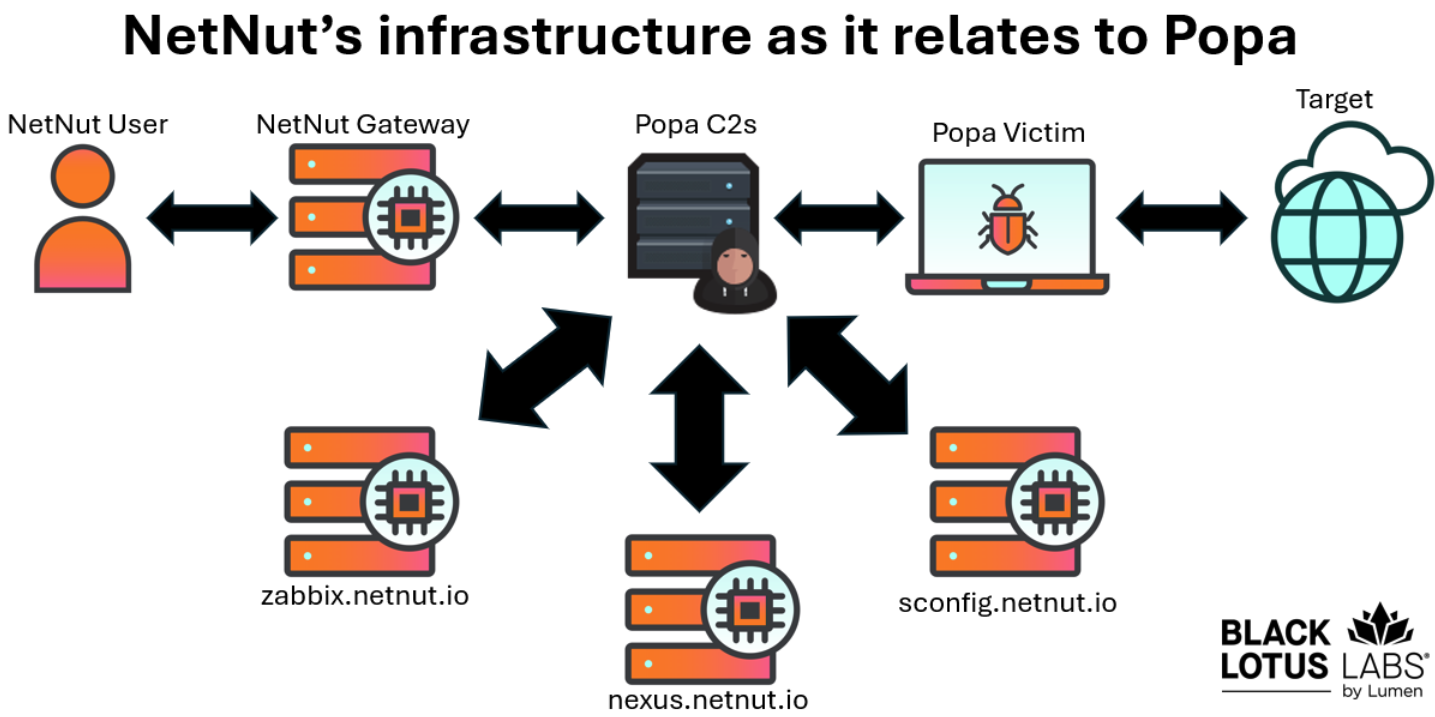
    NetNut’s infrastructure, in a nutshell. Image: Black Lotus Labs, Lumen.

    The NetNut and Popa botnet takedown may have another added benefit, Brundage said: Lessening the impact of large distributed denial-of-service botnets that have been built on the backs of poorly configured residential proxy services. In January, Synthient revealed how cybercriminals had built the world’s largest DDoS botnet (Kimwolf) by tunneling through IPIDEA proxy connections into the local networks of TV boxes owners, and infecting other Android-based devices behind the victim’s firewall.

    While many of the bigger proxy providers took steps to block this activity, resellers of the major proxy networks have been far slower to respond to the threat, Brundage said.

    “In terms of all these TV box devices getting compromised from the proxy network, it will have an impact on the DDoS botnets out there,” he said.

    For its part, Google reckons today’s actions have caused “significant degradation to NetNut’s proxy network and its business operations, reducing the available pool of devices for the proxy operator by millions.” But the company warns that proxy networks can rebuild themselves by effectively reselling other proxy services, as IPIDEA has done over the past few months.

    “Google has high confidence that many popular residential proxy brands are in fact whitelabeling the NetNut botnet,” the GTIG report concludes. “While we expect this disruption to have a larger ripple effect across the residential proxy ecosystem, observations after the disruption of IPIDEA proved that individual networks can appear resilient. What we have observed is that when faced with the degradation of their own botnet, proxy operators begin buying capacity from their competitors, effectively becoming a reseller. We recognize that creating a lasting disruption in this fluid ecosystem means we must scale our efforts to target the infrastructure of several interconnected providers.”

    As KrebsOnSecurity has warned repeatedly, most of the no-name TV streaming boxes for sale on the major e-commerce websites either come pre-installed with residential proxy software, or require the installation of proxy SDKs in order to use the device for its stated purpose (streaming pirated movies, sporting events and TV shows). Google’s advice here is sound: When it comes to TV boxes, stick to name brands from reputable manufacturers, and then be sparing and judicious with any apps you choose to install.

    The sketchy TV boxes that are being commandeered by the Popa botnet and other threats all come with or require the user to install unofficial Android operating systems that do not operate within the confines of Google’s Official Play Protect store. Google says consumers can confirm whether or not a device is built with the official Android TV OS and Play Protect certification by following these instructions.

    Even people without TV streaming boxes can find their smart TVs enrolled in residential proxy networks, just by installing one of thousands of apps available for download on Samsung and LG smart TVs. In a report released last month, the proxy tracking company Spur found 42 percent of apps available for download via the webOS operating system on LG smart TVs include SDKs that turn one’s television into an always-on residential proxy node. More than a quarter of the apps made for Samsung’s Tizen operating system had similar residential proxy components, Spur found.

    Image: Spur.us.

    Update, 4:24 p.m. ET: Included a statement shared post-publication from an attorney representing NetNut parent Alarum Technologies.

    ¶¶¶¶¶

    ¶¶¶¶¶

    ¶¶¶¶¶

    ¶¶¶¶¶

    ¶¶¶¶¶

  • Google has significantly degraded NetNut, one of the biggest networks that turns home devices into rented relays for other people’s traffic. Working with the FBI, Lumen, and others, Google’s Threat Intelligence Group (GTIG) said this week it had reduced the network’s pool of usable devices by millions. Google identifies NetNut, also tracked as Popa, as a network spread across home

    ¶¶¶¶¶

    ¶¶¶¶¶

    ¶¶¶¶¶

    ¶¶¶¶¶

    ¶¶¶¶¶

  • Threat actors associated with the Anubis ransomware operation have been observed exploiting the Citrix Bleed 2 (CVE-2025-5777) vulnerability to obtain initial access. “Although tactics differ between affiliates, common patterns emerged in tradecraft through use of legitimate Remote Management and Monitoring (RMM) tooling, credential access, and hands-on-keyboard procedures used for lateral

    ¶¶¶¶¶

    ¶¶¶¶¶

    ¶¶¶¶¶

    ¶¶¶¶¶

    ¶¶¶¶¶

  • As Space Force leaders push for more orbital warfighting capabilities and even potential moon operations, senators want to make sure they have enough space-focused military lawyers for future conflicts.

    The Defense Department would be required to assess its “space law requirements” to face rising threats and examine “options for establishing a dedicated legal organization within the Air Force, Space Force, or Space Command,” under the  Senate Armed Service Committee’s version of the National Defense Authorization Act, released last month.

    “The committee recognizes that operational demands in the space domain have grown, including reliance on commercial integration, allied and partner cooperation, and dual-use

    technologies,” says the SASC’s NDAA report. “The committee is concerned that current legal, policy, and institutional structures within the Department of Defense may not have kept pace with the complexity of space operations.”

    The newest military service branch is aiming to increase its budget, double its troop strength, and boost its role in operations such as those in Venezuela and the war in Iran. Advocates for the Space Force talk about extending its reach to the Moon’s orbit—and maybe even putting troops on the lunar surface.

    Senators said that lawyers well-versed in outer space will be needed for those complex missions. 

    “The U.S. Space Force lacks its own legal corps, formalized training pipeline, or enduring mechanism to develop a specialized space law expertise,” the SASC reporting language reads. “The growing complexity of international space law, civil-military partnerships, commercial integration, dual-use technologies, and industrial base considerations require enhanced, domain-specific legal capacity.”

    It’s time to reconvene the JAG-related discussions that fizzled out as the Space Force was being formed, said Aaron Brynildson, a University of Mississippi law professor and retired Air Force judge advocate general. Currently, the service shares uniformed lawyers with the Air Force. Now, he sees creating a space-specific JAG corps as essential for future operations.

    “Space is going to be the most important domain in the next 20 years, and it's the one domain where I think U.S. dominance isn't guaranteed,” Brynildson said. “If you're going to grow the Space Force from 6,500 people to 20,000 in the next couple of decades, you need to treat it like a real branch, and part of that is having their own JAGs advise on domain-specific space warfare.”

    In April, the Space Force identified legal maneuvering from China and Russia as a major concern for space operations. 

    “China and Russia have long used international and domestic legal frameworks and regulatory mechanisms to degrade their opponents’ capabilities, weaken opposing coalitions, and obtain international sympathy and support from third parties,” reads the ambitious “Future Operating Environment 2040” document, which examined growing space threats. “With international space law having remained essentially unchanged since the 1960s and 1970s, when the four foundational United Nations treaties were established, lawfare presents an asymmetric approach to restricting U.S. freedom of action in the space domain.”

    The SASC NDAA calls for the chief of space operations, the Air Force secretary, the head of Space Command, and the Defense Legal Services Agency to examine “current and projected requirements for space law expertise” and to submit a report to the Senate and House Armed Services Committees by Dec. 1

    Lawmakers want to know how many legal personnel currently support space operations, any gaps in legal readiness related to international space law, options for establishing a dedicated space legal organization, the requirements for advanced domain-specific legal education, and opportunities for academic and research partnerships relevant to “national security space operations.”

    ]]>

    ¶¶¶¶¶

    ¶¶¶¶¶

    ¶¶¶¶¶

    ¶¶¶¶¶

    ¶¶¶¶¶